


Is There a Kids Version of ChatGPT? (Honest Answer)
.webp)
ON THIS PAGE
Subscribe To Get Weekly Family AI Discoveries

- There is no official kids version of ChatGPT. OpenAI's minimum age is 13, with parental consent required under 18.
- For under-8s, constrained AI like WordLab plus parent-led tools like Gemini Storybook are safer than free-form chatbots.
- Khanmigo, Google Gemini (with Family Link), and Microsoft Copilot offer more kid-safe AI experiences than ChatGPT.
- Children aged 13+ can use ChatGPT safely with supervision, clear rules, and no personal information shared.
- WordLab is a free AI vocabulary game that works well for younger kids with no safety concerns.
If you've searched "kids version of ChatGPT," you're asking exactly the right question. You've probably seen your children curious about the AI tool everyone's talking about, and you want to know whether it's safe, whether there's a version designed for them, and what the alternatives are. I asked the same questions when my kids started asking about it.
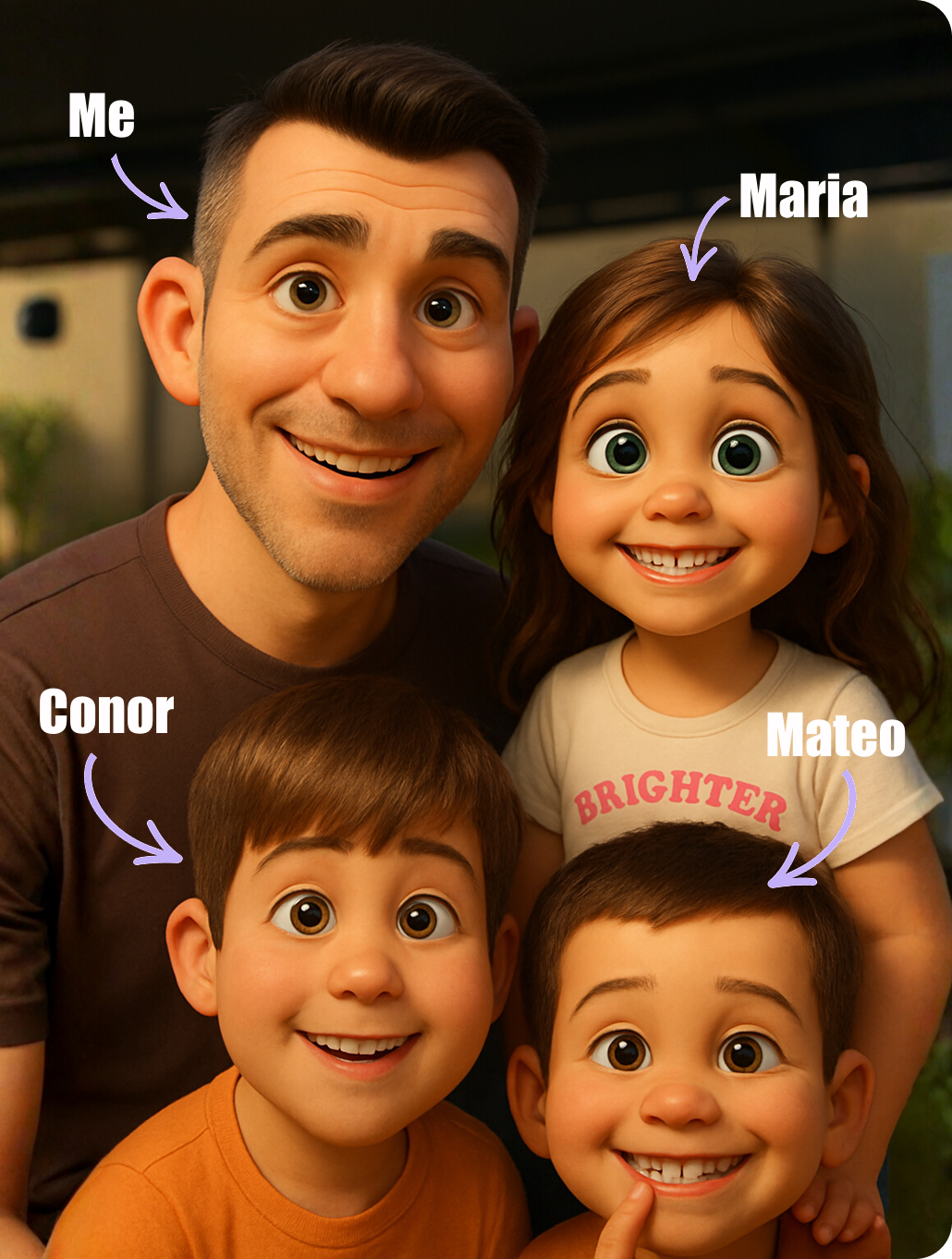
I've spent 500+ hours testing AI tools with my three kids, now aged 4, 6, and 8. My 8-year-old uses ChatGPT with close supervision for educational image generation fun. My 6-year-old plays WordLab for vocabulary games and joins the parent-led storybook and infographic sessions we make together. My 4-year-old? He's not ready for any of it yet, and that's fine. The honest answer on a "kids version of ChatGPT" is that it doesn't exist, but there are better options depending on your child's age.
This guide gives you the full picture: what ChatGPT's actual age limits are, which tools work for kids, how to use ChatGPT safely with older children, and what I actually use with my own family.
Not sure which tool is right for your child?
Take our free 2-minute quiz and get personalized AI tool recommendations based on your child's age and interests.
Is there a kids version of ChatGPT?
No. As of 2026, OpenAI has not released a kids-specific version of ChatGPT. There is no ChatGPT Junior, no ChatGPT for Kids, and no age-restricted mode designed for younger users.
OpenAI's terms of service set the minimum age at 13. Children under 13 are not permitted to use ChatGPT. Children aged 13-17 can use it with parental consent. That's the full extent of OpenAI's current approach to minors.
OpenAI has publicly said they're working on family-friendly features, but as of mid-2026, nothing has launched. Other AI companies have moved faster on this front.
💡 Parent Insight: A few third-party apps claim to offer "ChatGPT for kids" in their marketing, but they're just consumer wrappers around the same ChatGPT API. They're not designed with children's safety features built in at the model level. Be sceptical of any product using that phrase.
Why ChatGPT isn't designed for young children
ChatGPT was built for adults. That affects the experience in several practical ways:
- No content guardrails tuned for children. ChatGPT has general safety filters, but it wasn't designed to handle the full range of questions a curious 6-year-old might ask.
- Text-heavy interface. Young children who can't read fluently can't use ChatGPT independently. The interface assumes adult literacy.
- No parental visibility. There's no parent dashboard, no usage reports, and no way to see your child's conversation history across sessions.
- Data policy is adult-focused. ChatGPT is COPPA-compliant in the sense that it's not intended for under-13 users. But it wasn't built with child data minimisation as a core design principle.
None of this means older kids shouldn't use it. My 8-year-old uses it a few times a month. But you need to understand what you're working with before deciding if it's appropriate for your child.
The best kids version of ChatGPT alternatives by age
Since no official kids version exists, here are the tools that actually fill that gap, organised by age.
Ages 3-8: No purpose-built ChatGPT equivalent worth recommending
Honest answer first: there isn't a purpose-built ChatGPT-style AI for the 3-8 age range that I'd put my own kids in front of unsupervised. The products that market themselves this way are usually consumer wrappers around the same adult APIs, with marketing copy as the only thing that's "kid-friendly."
What actually works for this age range:
- Constrained AI like WordLab, where the output format is locked to vocabulary games. No free-form chat, no surprises.
- Parent-led tools like Gemini Storybook, where the parent creates and the kid enjoys. Personalised illustrated stories with read-aloud narration. 100% free, and the kid never needs an account.
- Waiting. There is no rush. The tools will be better in two years, and the cognitive-readiness conversation is the more important one to have first.
My 6-year-old plays WordLab and joins the parent-led storybooks and infographics we make together. We don't do free-form AI chat with her yet, and that's a deliberate choice.
Ages 8-12: Khanmigo (educational AI with teacher oversight)
Khanmigo is Khan Academy's AI tutor. It's not a free-form AI assistant like ChatGPT. It's deliberately constrained to educational contexts, which makes it much safer for primary-school-aged children.
The key difference is that Khanmigo won't write your child's homework for them. It asks questions, prompts thinking, and guides kids toward answers rather than handing them over. That's exactly what a learning tool should do.
Who it suits: Kids aged 8-12 who are using AI for homework support or learning. It works best within the Khan Academy ecosystem.
Cost: Free for students through school accounts. Khan Academy Plus ($44/year for families) includes Khanmigo access.
Ages 10+: Microsoft Copilot (safer than ChatGPT for kids)
Microsoft Copilot (the free version at copilot.microsoft.com) has more conservative content defaults than ChatGPT and includes family safety integrations through Microsoft Family Safety. It's not a dedicated kids product, but it's a more controlled environment than ChatGPT for children approaching their teens.
It's also integrated into Edge browser, which means you can apply browser-level parental controls on top of it.
Who it suits: Kids aged 10-12 who want to explore AI with a slightly more supervised experience before graduating to ChatGPT.
Any age: WordLab (AI vocabulary games)
WordLab is a free AI vocabulary game we built for aitoolsforkids.com. You type any topic, and the AI generates five different word games around it: a crossword, word search, unjumble, missing letters, and a "who am I?" quiz.
My 8-year-old uses it for educational fun, learning new vocabulary on topics he is genuinely interested in. My 6-year-old plays the word search games.
There's no personal information required, no account needed, and the AI output is constrained to vocabulary game formats. It's the most genuinely child-appropriate AI tool on this list.
You can access it for free at aitoolsforkids.com/wordlab.
How to use ChatGPT safely with teens (ages 13+)
If your child is 13 or older, ChatGPT can be used safely with the right setup. Here's the system that works in our house.
Set up the account together
Create the ChatGPT account with your child, not for them. Go through the settings together. Enable the parental consent flow for under-18 users. Discuss what the tool is and what it isn't.
My 8-year-old is a couple of years away from being old enough for an independent account, so we use mine together. He sits next to me, I type or we type together, and we read responses together.
🔒 Safety Note: Never let children under 13 use ChatGPT, even with a parent's account. Beyond the terms of service issue, children that age haven't developed the critical thinking needed to evaluate AI outputs accurately. The risk isn't just inappropriate content. It's also misinformation that sounds plausible.
No personal information. Ever.
This is a non-negotiable rule. No real full name, no school name, no address, no phone number, no photo that contains identifying information. ChatGPT conversations are used to train models unless you opt out in settings. Even with opt-out, treating personal data as off-limits is a good habit.
Our family rule: if the AI asks for information we'd hesitate to give a stranger, we don't give it.
Treat outputs critically
My 8-year-old's favourite use right now is ChatGPT Images 2.0. We are generating a fact-packed infographic every evening with 5 facts about Colombia ahead of a family trip there, and he asks for one on a different topic most weekends. I make a point of fact-checking each one with him before we treat it as truth.
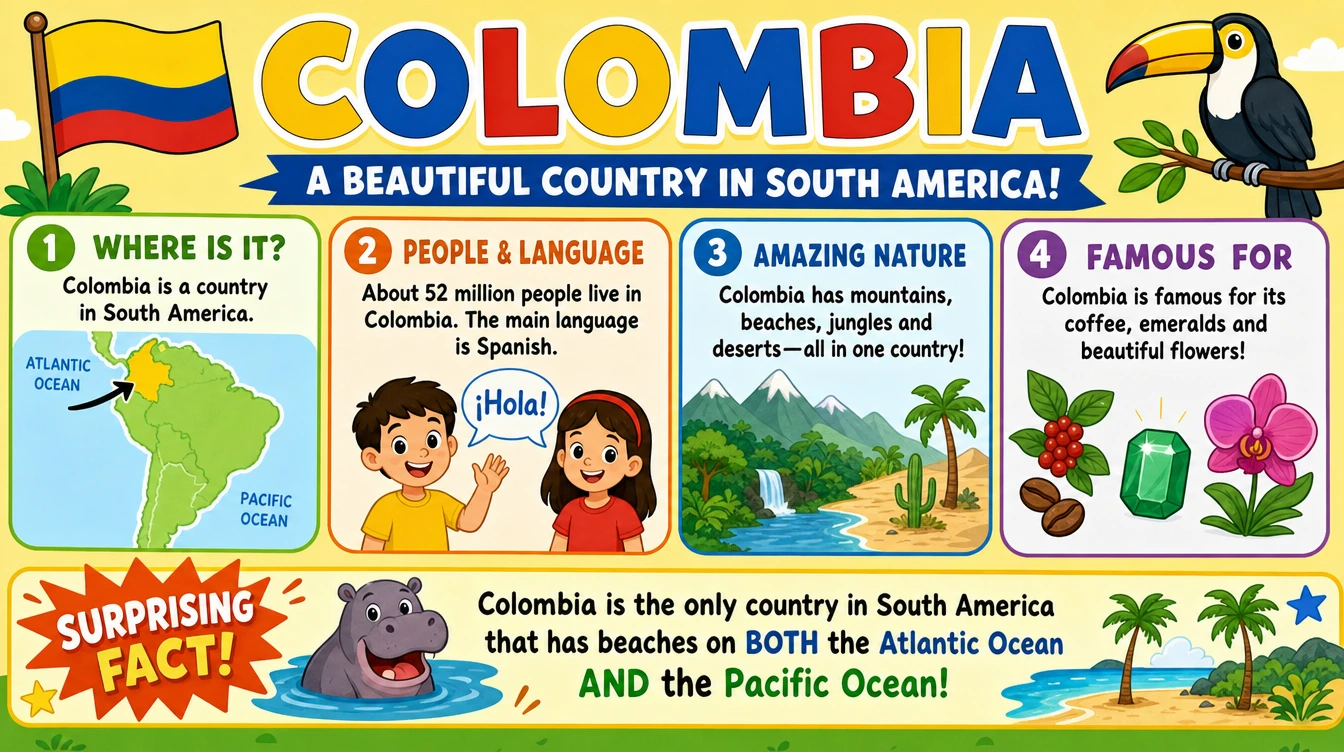
Most of the time the facts come back spot on. There has been the odd occasion where a label was off, and that has been a better lesson about how AI works than any lecture I could give him.
The habit to build: Before acting on anything ChatGPT tells you, ask yourself: how would we check this? If it's a factual claim, look it up. If it's a visual asset like an image or infographic, scan it for errors before treating it as truth. AI is a starting point, not a final answer.
Keep sessions visible
ChatGPT on a shared family computer in a common room is a very different setup from ChatGPT on a child's phone at midnight. Location matters. We use ChatGPT at the kitchen table, and my son knows I can and do look at the conversation history.
This isn't about distrust. It's about the same reason we don't give an 8-year-old unsupervised internet access generally. The tool is powerful enough that oversight is part of responsible use.
What I actually use with my three kids
Since I test AI tools professionally with my family, here's the real breakdown:
| Child | Age | Tools used | How we use them |
|---|---|---|---|
| Oldest | 8 | ChatGPT (supervised), WordLab | Image projects together, vocab games solo |
| Middle | 6 | WordLab + parent-led image projects | Word search games, joins parent-led infographic creation with older sibling |
| Youngest | 4 | None independently | Watches siblings, occasionally picks WordLab topics |
The honest answer is that my 4-year-old isn't ready for AI tools and doesn't need to be. There's no rush. The tools will still be there when he's older, and they'll almost certainly be more sophisticated by then.
Questions parents ask most often
Is ChatGPT safe for a 10-year-old?
Technically no, because the minimum age is 13. Practically, if your 10-year-old is using it alongside you and you're following the safety guidelines above, the risk is manageable. But I'd lean toward Khanmigo or Copilot for that age group, since they're designed with more appropriate guardrails.
Can I make a ChatGPT account for my child?
OpenAI's terms allow parental consent for users aged 13-17, but don't allow accounts for children under 13 at all. Creating an account on behalf of a child and then leaving them to use it unsupervised isn't compliant and creates real safety risks.
Will ChatGPT produce inappropriate content for kids?
ChatGPT has safety filters, but they're not designed for children. A curious child asking odd questions could get responses that, while not harmful to an adult, might be confusing or disturbing to a young child. The risk is lower with the newer models, which have better filters, but it's not zero.
What about Claude?
Claude (made by Anthropic) is an alternative to ChatGPT with broadly similar age restrictions and a similar safety profile. It doesn't have a dedicated kids mode either. Many parents find Claude's tone more measured than ChatGPT, which can be useful for educational use with older teens. For families wanting to explore AI beyond ChatGPT, it's worth comparing.
What about Gemini?
Google's Gemini has the same baseline minimum age of 13. The difference is that Google Family Link supports supervised Gemini access for younger users, with image generation blocked for under-18s by default. That's a meaningfully more controlled environment than ChatGPT for tweens. Google also launched Gemini Omni in May 2026, a video generator that sits behind the paid Google AI Plus tier ($7.99/mo) at the moment. For the deeper safety side-by-side, see ChatGPT vs. Gemini for Kids: Which AI is Safer?.
The bottom line
The direct answer to "is there a kids version of ChatGPT" is no. OpenAI hasn't built one, and the current product is designed for adults. But that doesn't mean young children have no options.
If your child is under 8, constrained AI like WordLab plus parent-led tools like Gemini Storybook are the safer route. There's no need to introduce free-form AI chat at that age. For the 8-12 range, Khanmigo works well in an educational context, and WordLab is appropriate for any age. For teens aged 13+, ChatGPT with active parental supervision and clear household rules is workable.
The right tool depends on your child's age, maturity, and what you're hoping AI will help them with. There's no single right answer, which is exactly why I test all of this with my own kids before writing about it.
I share honest results from our family testing every week. If you want to know which AI tools are actually worth your time (and which ones I quietly stopped using after a week), join the newsletter below.