


Does AI Hurt Kids' Learning? What the Research Says
ON THIS PAGE
Subscribe To Get Weekly Family AI Discoveries

- In one study, kids with unrestricted ChatGPT did 48% better on practice but 17% worse on the real test with no AI
- Kids who used an AI tutor that gave hints, not answers, scored the same as kids with no AI at all
- The problem isn't AI. It's AI that hands over the answer before your child does the thinking
- Tools that make kids work (hints, practice, feedback) help. Tools that do the work for them quietly make them weaker
- The skills that matter most for the future, like reading, talking about ideas, and critical thinking, have nothing to do with technology
If you've ever watched your child finish their homework suspiciously fast and wondered "did they actually learn anything, or did ChatGPT just do it?", this one is for you. It's the question I get most from other parents, and honestly, it's the one I worried about most myself.
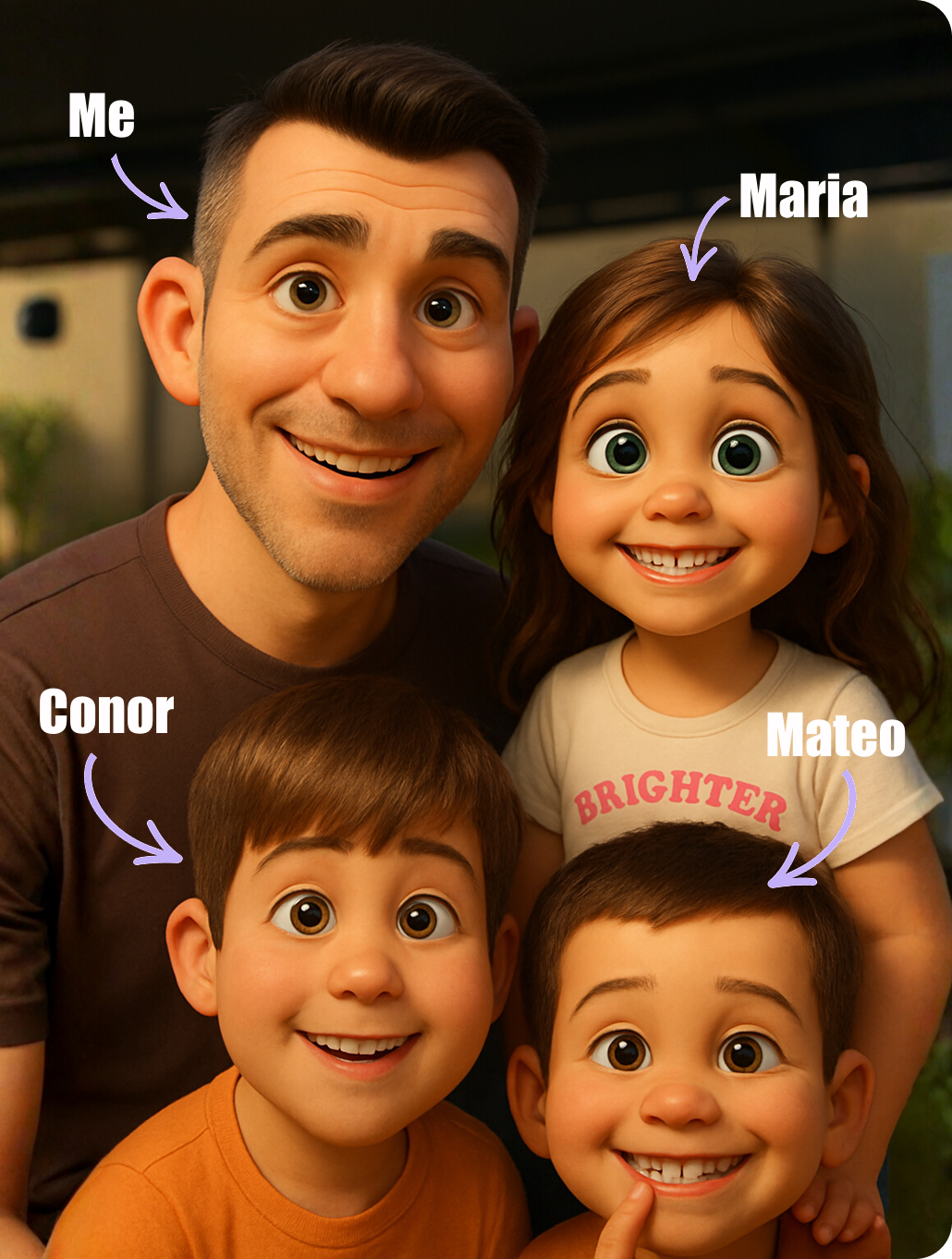
I've spent the last year testing AI tools with my three kids (Mateo is 8, Maria is 6, Conor is 4), and I recently watched a talk by futurist Sinead Bovell at SXSW EDU that lined up almost exactly with what I'd seen at our own kitchen table. There's now real research on whether AI helps or hurts kids' learning, and the answer is more useful than a simple yes or no.
So does AI hurt kids' learning? Sometimes, badly. But the same research shows a version of AI that genuinely helps. The difference comes down to one thing, and once you see it, you can't unsee it. Here's what the studies found, what it's looked like in our house, and the rules we use now.
Not sure which tool is right for your child?
Take our free 2-minute quiz and get personalized AI tool recommendations based on your child's age and interests.
The study every parent should know about
Researchers from the University of Pennsylvania (Wharton) ran an experiment in high school maths classes. They split students into three groups. One group did their practice the old way, with a textbook. One group got unrestricted ChatGPT. And one group got an AI tutor that was built to give hints and guide them, but never hand over the final answer.
Everyone got the same lesson first. Then they practised in their groups. Here's where it gets interesting.
| Group | On practice problems | On the real test (no AI) |
|---|---|---|
| Textbook only | Baseline | Baseline |
| Unrestricted ChatGPT | 48% better | 17% worse |
| AI tutor (hints only) | 127% better | Same as textbook group |
Read that middle row again. The kids with unrestricted ChatGPT looked like they were flying during practice. They got 48% more problems right. Then, when the AI was taken away for the test, they did 17% worse than the kids who never touched it. The practice was an illusion. The AI was doing the thinking, so they never built the skill.
The hint-only tutor group is the hopeful part. They didn't get a magic boost on the test, but they didn't get worse either. They came out the same as the textbook kids, while clearly enjoying the practice more.
Parent insight: The headline isn't "AI is bad for learning." It's "AI that gives the answer is bad for learning, and AI that makes your child work for it is not." That single distinction is the whole game, and it's the same line researchers draw between an AI tutor and an AI assistant. I dug into that split in what the 2026 research says about AI tutors vs assistants.
Why "give me the answer" AI quietly backfires
There's a phrase for what's happening here: cognitive offloading. When you hand a hard task to a machine, your brain skips the work, and the part of your brain that would have grown from the struggle just doesn't.
A separate study from Carnegie Mellon and Microsoft found that adults who leaned heavily on AI showed weaker critical thinking. As Sinead Bovell put it in her talk, when you outsource your cognitive work to an AI, you actually become cognitively weaker. For an adult firing off work emails, that's a slow erosion. For a child whose brain is still being built, it's the difference between learning to think and learning to copy.
The really uncomfortable bit she raised: it's not just about the missed maths problem. It's a confidence thing. When kids get used to the machine producing the answer, they stop trusting their own ability to find one. We've already done this experiment once with smartphones and social media. We don't need to run it again with chatbots. If the laziness worry is the one keeping you up, I went deep on what teachers actually report in is AI making kids lazy.
What this looks like in our house
None of this was a surprise, because I'd watched both versions play out with my own kids.
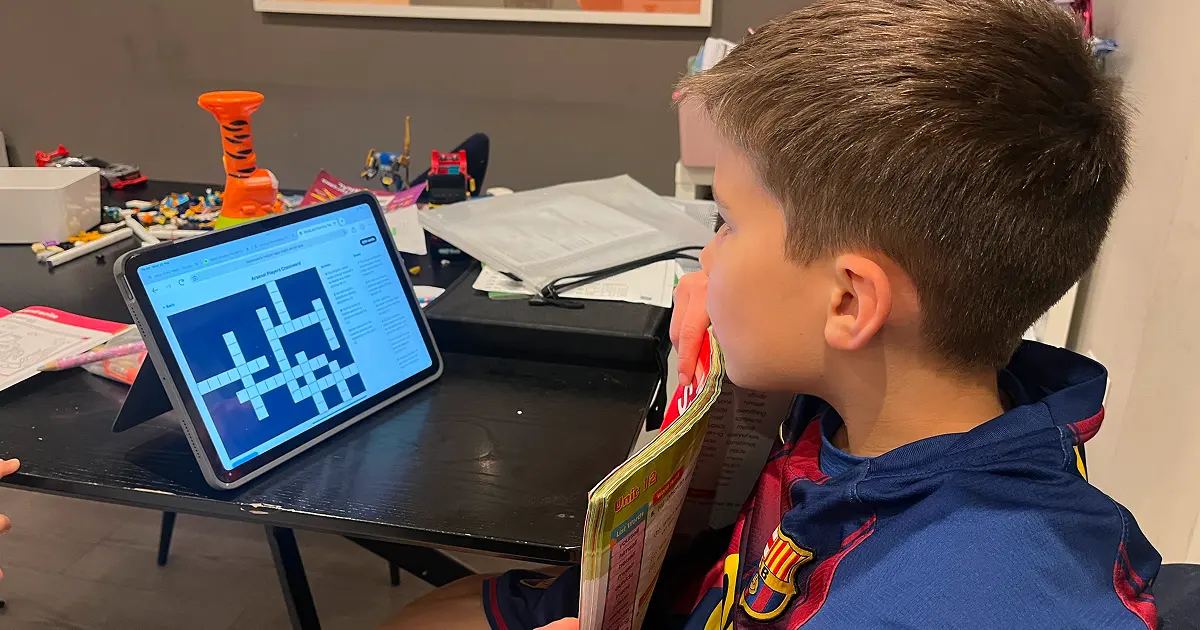
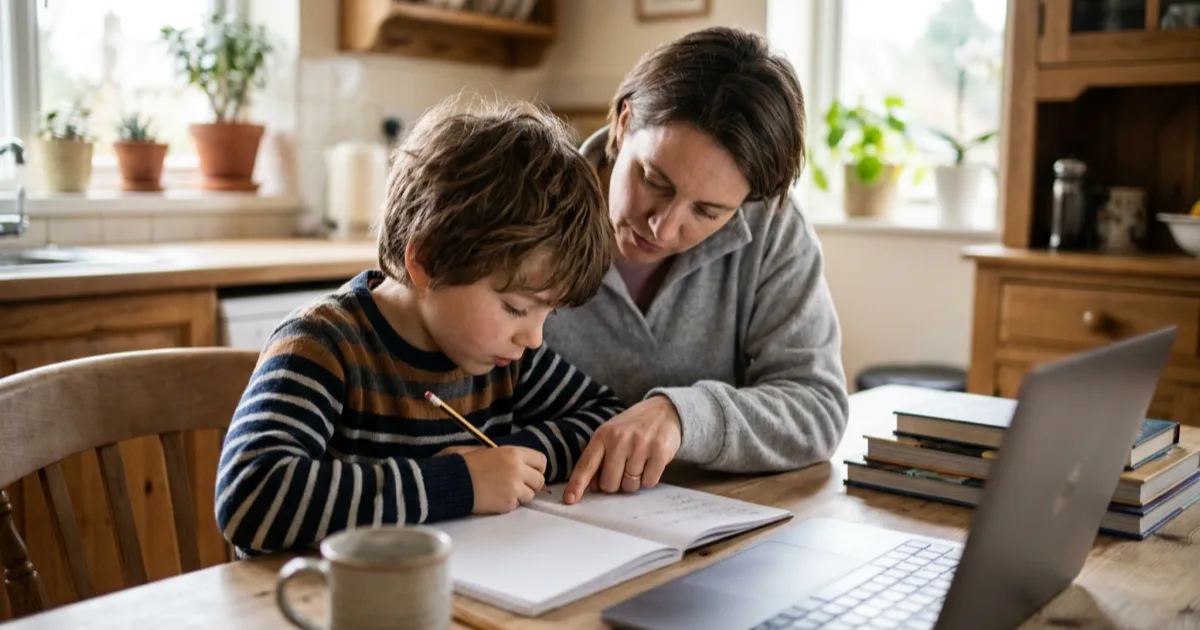
The good version: my 8-year-old worked through an AI maths tutor that gives hints and walks him through a problem instead of just printing the answer. He ended up learning multiplication before school had formally taught it, and he could do it without the AI afterwards. That's the hint-only group from the study, at my kitchen table. I wrote up exactly how that went in my full Synthesis Tutor review.
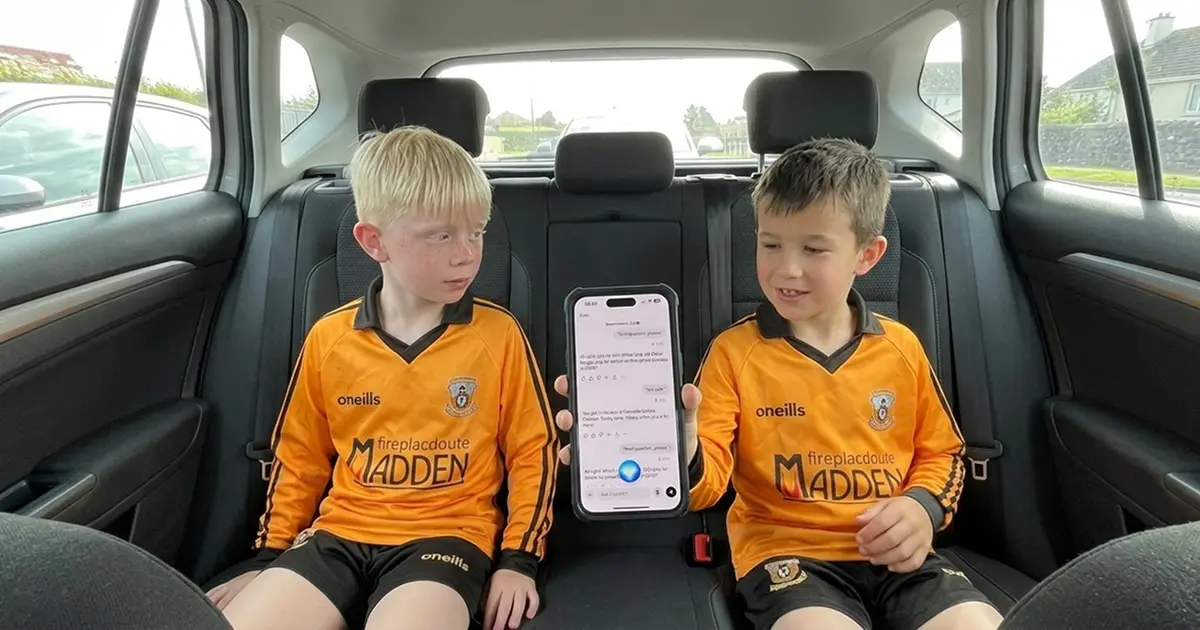
The other version taught a different lesson. We ran a quick AI voice quiz in the car one day, and the kids caught it confidently making things up, getting facts plain wrong. It turned into the best teaching moment of the week, because instead of trusting the machine, they started checking it. That's the whole skill: not "the AI said so," but "is the AI actually right?" The full story is in our in-car AI quiz.
What I learned: Speed and confidence during homework can be a warning sign, not a win. The moment my kids started questioning the AI's answers was worth more than any correct answer it gave them.
The kind of AI that actually helps
So what does the helpful version look like? The research and the talk point to the same three things:
Hints, not answers: The AI guides your child to the answer instead of printing it. They still have to do the last step themselves, which is where the learning lives.
Immediate feedback: Good AI tells a child "not quite, look at this part again" in the moment, rather than waiting for a test two weeks later to reveal they were lost the whole time.
Self-paced: It meets your child where they are and adjusts, instead of forcing every kid through the same problem in the same ten minutes.
This is exactly the principle I built our own free games around. WordLab turns any topic your child is into, whether that's their football team or sharks, into word games they have to solve, not watch. We started doing this with their actual homework word lists, which I documented in how we turned their homework word lists into games.
QuizLab gives them a quiz matched to their actual school year and class, with hints rather than hand-outs. They feel like games, but the child is doing the work. That's not an accident. It's the one thing the research says matters.
Free download
Get the AI Tutor Prompt for Kids
The exact prompt I use so AI helps my kids learn instead of doing their homework for them. Paste it into ChatGPT, Claude or Gemini, fill in four blanks, and it turns any chatbot into a patient tutor that gives hints, not answers.
Get the free PDF →"But my kid will use it at home anyway"
This was the most honest point in the whole talk, and it's true in my house. The safest assumption for any parent now is that your child can reach a supercomputer on the phone or tablet in the next room. Banning it outright mostly just teaches them to hide it.
So the move isn't to fight the tide. It's to change what we ask of them. One teacher in the talk stopped trying to catch kids using ChatGPT and instead started asking, "okay, show me your prompts. Show me how you pushed it." Asking good questions and checking the answers is a real skill. Blindly pasting the first response is not.
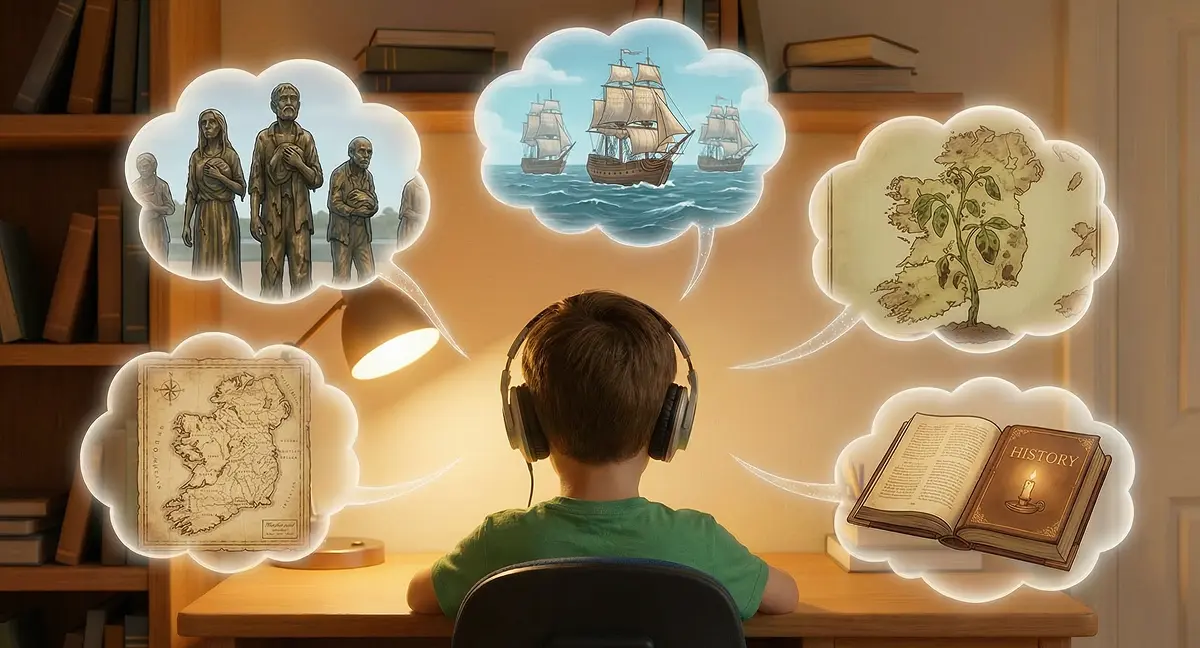
At home, that looks like letting the AI carry the heavy lifting of facts while my kids do the understanding. We used NotebookLM to turn the Irish Famine into a podcast my 8-year-old actually wanted to listen to, then talked about it together afterwards (the full walkthrough is in our NotebookLM Irish Famine project). The chatbot can carry the facts. It can't carry the understanding. That has to happen in his head, out loud, with me.
The skills that matter more than any tool
Here's the line from the talk I keep coming back to, from a futurist who spends her days around robots and brain interfaces: the most important skills for the future have nothing to do with technology.
She means reading for the joy of it and then arguing about the ideas. Playing freely. Talking in front of people. Cross-disciplinary thinking, where maths connects to history connects to a story. These are the things AI can't do for your child, and they're mostly free. If you want a concrete starting list, I pulled together the ones that actually hold up in 7 AI skills every kid should learn.

She put it in a way that took the pressure right off. If your child can barely work an iPad but reads books, loves their sports team, and spends too long at the park, that child is going to be fine. It's not screen fluency at five that predicts how they'll do. We're preparing kids for a future none of us can see, which means the real job is teaching them to think, not to type.
How we use AI at home now
Here's the simple system that's worked for us, pulled straight from these lessons:
- Brain first, AI second. The first attempt is always theirs. AI only comes in after a real effort, never instead of one.
- Hints over answers. If a tool just produces the finished thing, it's the wrong tool for homework. Pick ones that make them work.
- Talk it back to me. After any AI session, they have to explain what they learned in their own words. If they can't, the AI did the learning, not them.
- Check the machine. We treat every AI answer as a claim to be tested, not a fact. Catching it being wrong is a win, not a failure.
- Protect the non-screen stuff. Reading, playing, and arguing about ideas come first. The tools are a small part of the week, not the centre of it.
The bottom line
Does AI hurt kids' learning? It can, and the research is blunt about it. AI that hands over the answer makes kids look better today and learn less for tomorrow. But that's not the whole story. AI that gives hints, responds in the moment, and makes your child do the final step doesn't harm learning at all, and it makes practice something they'll actually come back to.
You don't need to ban it, and you don't need to fear it. You need to be the parent in the room asking, "did you think, or did you copy?" Get that one question right and AI becomes a decent study partner instead of a shortcut that hollows out the work.
I test AI tools with my three kids every week and share the honest results, the wins and the things that flopped, with other parents trying to get this right. If that's you, join the newsletter. It's free, it goes out every Sunday, and there's no hype, just what actually worked in our house.
Tested with my three kids, every Sunday
I try AI tools with Mateo (8), Maria (6) and Conor (4) and share the honest results, the wins and the flops. Free, no hype, one email a week.
Grab the free prompt & join in →Want to hear it from the source? This post is my parent’s-eye take on a talk the futurist Sinead Bovell gave at SXSW EDU. If you’d like the full version, it’s worth a watch: